What really goes into creating a wedding film that makes you feel the magic all over again?
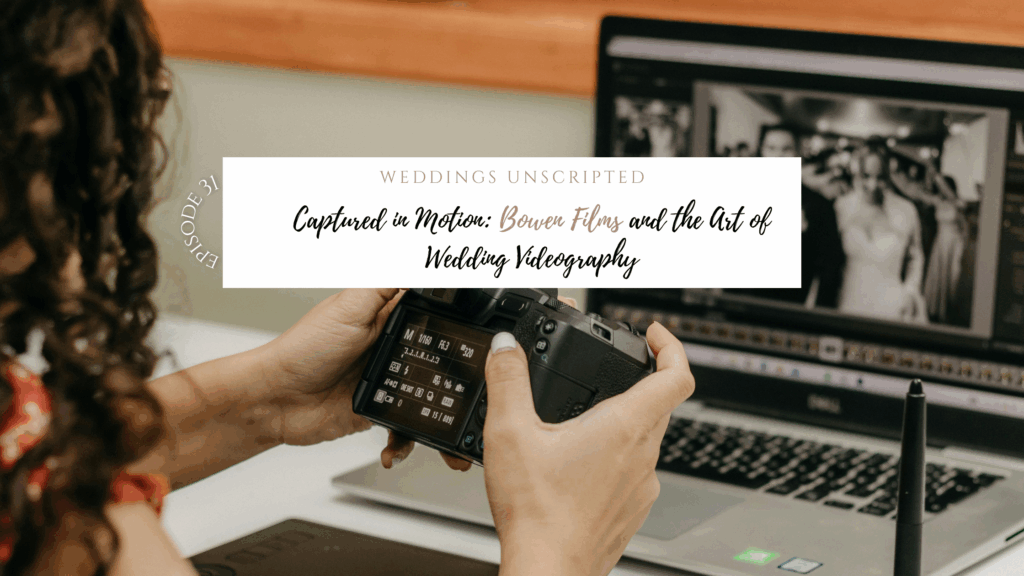
In this episode, Alex and Alison sit down with Whitney and Taylor of Bowen Films, the sister duo behind some of the most heartfelt and cinematic wedding films in the industry. They share how their father’s legacy inspired their work, what couples often overlook when choosing a videographer, and why video captures emotion in ways photos can’t.
In this episode, you’ll hear:
[01:00] – Meet Whitney and Taylor of Bowen Films and their journey from family legacy to full-time creators.
[04:50] – The emotional rewards of filming weddings and how clients react to their finished films.
[07:45] – Why wedding videos are not a luxury—and what couples regret when they skip one.
[10:20] – Reading the room: how Bowen Films captures authentic, emotional moments discreetly.
[14:10] – Why strong communication between planners, photographers, and videographers matters.
[22:00] – How the photographer–videographer dynamic has evolved.
[28:00] – Behind the scenes: capturing clean sound and the importance of audio backups.
[39:40] – The truth about raw footage (and why you probably don’t want it).
[47:00] – The value of backups, trust, and having a reliable creative team.
[51:30] – Bowen Films’ best practices for seamless, stress-free wedding videography.
Key Takeaways:
- Emotion Over Everything: Wedding videos allow couples to relive the sounds, laughter, and tears that photos alone can’t capture.
- Preparation Is Everything: From backups to audio checks, professional videographers plan for every “what if.”
- Communication Is Key: A great vendor team thrives on respect, transparency, and mutual understanding—no egos required.
Connect with Bowen Films:
Website: https://bowenfilms.net/
Instagram: https://www.instagram.com/bowenfilms/
Facebook: https://www.facebook.com/BowenFilms
Connect with us:
Visit our website: www.weddingsunscripted.com
Cherry Blossom Weddings & Events: www.cherryblossomwe.com
Follow us on our socials:
Facebook: https://www.facebook.com/profile.php?id=61572429101755
Instagram: @weddings_unscripted
TikTok: @weddings_unscripted
Transcript:
[00:00:56] Alex: Welcome back to our 30th episode of Weddings Unscripted. Today of course we always have special guests, but we have the Dynamic Duo, the Sisters of Bowen Films.
[00:01:08] Alex: We have Whitney and Taylor. How are you guys doing today?
[00:01:11] Bowen Films: Hey, doing great. So excited to be here.
[00:01:14] Alex: Thank you so much for joining us, and it’s funny because my 20 years of experience, I got to know your father pretty well because we worked with him on site and then you two, I think at some point decided to join the family business. So if you wouldn’t mind starting by kicking off and just telling us sort of the history of Bowen Films and like how your dad got started and when you guys joined in and all the good stuff.
[00:01:41] Bowen Films: Yeah, definitely. It’s been a few years. So my dad started with my uncle, actually with his wedding video business back in 1989. And he learned everything basically through that company and, in 1999, he ended up going off on his own. He wanted to spend more time with us and be able to go to our soccer games, and do all that stuff So he went out on his own at that point. And yeah, it’s just kind of evolved from there. And then Whitney, you can talk about how you got into it.
[00:02:16] Bowen Films: Yeah. So I have a really great memory of being a Girl Scout, back when I was maybe like 12 years old or something, and one of our badges was to learn about professions and my dad had offered to have my troop go to his office.
[00:02:33] Bowen Films: And he was showing us all like the ways to be like, creative with editing, and he was making shots like black and white or like, different colors and stuff and I was like this is so cool.
[00:02:43] Bowen Films: Like, this is so creative and this is so fun. And I was like, oh my God, it is a cool job. So in terms of how I got into the business. This was really an in-between kind of job for me at first.
[00:02:56] Bowen Films: I went to college for environmental science, and I was a consultant for a few years there. And I decided, you know, it was really wasn’t for me. I wanted to, you know, look into other things and my dad was like, he actually made me a job proposal and I accepted and so I just started going to weddings with him and started the post production, I really got into that and realized how rewarding of a job this really is. And we can get into that a little later I guess, but, just getting those emails afterwards, after you know, you limited the videos. I got one last week and the mom literally, she said, I’m writing this email with tears in my eyes because this video is just such a great, keepsake for us to look back on and, can’t thank you enough.
[00:03:48] Bowen Films: And I’m almost crying. It is oh my gosh. That’s so amazing. I feel like you had a better story with yours, but mine was I actually went to school to be a PE teacher and similar to Whitney, I got into it and I was like, yeah, not gonna do this for the rest of my life and so I started doing it same thing, like on the side, just as an in-between, and then before you know it you’re doing it every weekend, you know? but I think we both can say that like we feel extremely grateful that we were in a position to have something like that for us to fall back on. I think that’s a luxury to be able to, have a backup plan like that and then to also on top of that kind of start enjoying it and really find it rewarding and all those things. Yeah, definitely. Like at first it was like well, I need a job, so let me try to see if this is something I like. And then you’re like, wow, awesome. You know, obviously with our dad’s still very much part of business, but eventually it will be us and we are so cool and we just love it.
[00:04:52] Alex: That’s really cool. I remember on site, I think it was at Nadia and Shari’s rehearsal dinner, I was talking to your dad and he was just like, so excited about having you two and like tapping into the younger generation of what rising groom in today’s mind won, and I know you guys have started doing like some content creation and just adjusting and I think he was just so like really proud that he had you two sort of like by his side that were like just as interested in it as him. So I think it’s such a cool family business.
[00:05:25] Alison: And it is cool to see the transition because when I first started in the industry, I was working a lot with your dad and other videographers, and then you two started coming onto the scene and then working more and more with you, but still with your dad, ’cause obviously with a family run business, I think that’s what’s really cool is that you all can lean on each other so much and you could all three potentially be on site sometimes being first, second, and third shooters or assisting or something like that, and that kind of bond, no one else can really build that outside of a husband wife team. And I think that’s why there’s so many husband and wife videographer teams and photographer teams because this job requires so much trust and before I became a wedding planner, one of those things is my own personal wedding where it was kind of like, a large team.
[00:06:16] Alison: It’s a long story, but it was a large team of photographers on site and some were over here, some was over here, and they never really communicated on what they should be capturing. And when I got my photos after the wedding, it was like well, where’s all the decor photos? and it’s like there were, four or five of you on site and no one captured decor photos?
[00:06:39] Alison: I don’t get to get that back. But they did gift me with a video, so then I got to see decor and stuff and that was one of the things where it’s hit for me. When a lot of people ask me, and I’m sure you guys get this all the time, unfortunately, which, is I don’t know if I wanna add video, it might be the first thing that I cut.
[00:06:59] Alison: Because even in a world where video is so important right now on social media and in general to look back on things, I didn’t want or initially a videographer because it was a luxury expense at that time when I was getting married at a young age and we were mostly paying for our wedding on our own. And then that’s where getting gifted a video afterwards, I was like, oh, I’m a huge advocate now. You have to get a video. We actually watch our video more than we go back and look at our photos. And it’s not because our photos weren’t amazing, they were, and we love every single one of them. It was just the emotion that comes out of it and the atmosphere and I now can’t go back and be like, oh, why didn’t I think of getting a videographer? And I was just fortunate that it fell into my lap.
[00:07:46] Bowen Films: Yeah, I will say during the pandemic, and even still now, like we get emails at least one a week from past clients that we did their wedding 15 years ago or 20 years ago, sometimes even five years ago and they’re, asking, hey, you know, we lost the USB, is there any way that you could send us the file of our wedding videos, we wanna show our kids, or, my grandfather died and we just really wanna see, anything you have with him.
[00:08:14] Bowen Films: And, the way that we film, it’s a priority to us to capture everybody there at some point or another you know, whether it’s on the dance floor, whether it’s discreetly from a distance, like they’re at their table talking to family members and laughing and it’s just this great candid moment. And a lot of times, we do have that footage of everybody and it’s nice for you know, the client to look back and see their family or friends having fun and enjoying themselves, if they’re not around anymore. Paints a full picture of the whole day, like the full experience.
[00:08:50] Bowen Films: But yeah, so people definitely, I feel like the appreciation maybe comes in afterwards. And I will say that, we offer you know, the dynamic 62nd teaser, we do the three to five or six to eight minute highlight. We also do the long version. It’s our documentary film where we take all of the raw footage and edit it into one cohesive video, all the different angles, spliced in there, professional audio synced in.
[00:09:17] Bowen Films: And that is the video that people are wanting, honestly. For the most part, not every client is like this, but a lot of people want that 62nd teaser to go on social media. Instant gratification. Yeah. The relive it back in the days after the wedding sometimes, but the months afterwards, the years afterwards, they wanna see all the little details that they maybe missed or they can’t remember, so it’s really interesting ’cause people upfront, it’s like, oh, am I gonna watch that?
[00:09:48] Bowen Films: Like, is it something that I really need? Because a lot of videographers from what we’ve been told only offer, the highlight video or maybe it’s just the ceremony edit, but there’s so much more to the day, that we are constantly looking for those moments.
[00:10:03] Bowen Films: And sometimes those little in-between moments that maybe you wouldn’t even think to capture end up being, not only something that the client cherishes, but sometimes those are the ones that end up, on social media and you’re on the highlight video. Like sometimes those are the best moments, the ones that you’re not really planning for.
[00:10:22] Bowen Films: Not to jump around, but this is kind of where experience comes in where, we are anticipating moments. I feel not to brag, but I feel like we are masters of reading the room. And it’s very important to know where to be, and where not to be.
[00:10:38] Bowen Films: You know, when there’s toasts going on, one of my first things that I look for is, okay, where’s the parents of the bride? Where are the parents of the groom? Where are the grandparents? I wanna make sure they have a clear sight line of what’s going on because they are the VIPs and this is their experience too.
[00:10:56] Bowen Films: And again we don’t wanna block anybody, but sometimes it’s inevitable. You know, we do try to shoot from the back, but, they have people walking and in the shot and whatnot. But, having that foresight, and again, just being reading the room, being unobtrusive.
[00:11:11] Bowen Films: And I will say that we’re not super outgoing people ourselves, so we don’t wanna be like in your face with a camera. Like we would never do that. Just having that demeanor is a little bit helpful too. I feel like yeah, that makes sense. It’s not about us.
[00:11:27] Alison: And I think what’s something that you guys mentioned, which is, tooting your own horn. And I do think that you need to, because you guys have been in the industry and you’re able to pull on that legacy from your dad and your uncle and learn and watch everything for so long, more so than someone just entering in like off the street going, all right, I’m gonna be a videographer, because I think I’m really good at capturing details and stuff like that.
[00:11:50] Alison: And if they do that, that’s awesome, but you also have that legacy where I have never been on site and been like, oh my gosh, where’s Whitney? Where’s Taylor? Why is Tom not in here? So like, I can look across the room and be like, all right, they’re right there. I can wave at them and they’ll wave back at me.
[00:12:06] Alison: And I know that they’re ready for the shot, and one of those things where you’re easy to find, you’ve read the timeline or at least have been keeping track of it behind the scenes. We’re constantly giving you updates on site as well of Hey, in five minutes we’re gonna do this, and stuff like that.
[00:12:22] Alison: But I think what’s also important is what you mentioned too, is where to stand for speeches and I found out middle of my career, I’ll be honest and I think this is why this education is so important because even after doing it for so long, I’m still learning. And I think it was like one time I had a videographer say to me, and it could have even been you guys, I have no clue, I wanna set up here for speeches.
[00:12:48] Alison: And as a young planner, I was like, oh we’ll then do that, kind of thing. Then it was like, oh, let’s collaborate on that. So then it was like, alright, let’s talk with the photographer and the videographer on site of, okay, you’re looking at the whole room set up, where do you wanna be?
[00:13:04] Alison: where do you wanna be? And I found that new conversation that I’ve been implementing has saved a lot of drama or like missing shots or making sure lighting is good. But then also like sometimes, not all the time we don’t get to see the final product of the video. We hope to, not from you guys.
[00:13:25] Alison: We always see your videos, but sometimes we don’t ever get to see the video. And I might not get to see, oh, there was this massive exit sign right over the speaker that I didn’t see on site because I’m standing from this angle. But the videographer could see it in their lens and it’s like okay, now this conversation has become even more important to make sure that we have a good backdrop, that the lighting’s going to be there, that the microphone makes sense for the dj.
[00:13:52] Alison: So I’ll normally pull you guys a photographer and the mc to be like, where does everything work? And I found that really has caused a lot of success moving forward.
[00:14:04] Bowen Films: That what speaks to how great you guys are. Like it’s not a lot of people do that. There’s very few.
[00:14:10] Alex: I was gonna ask, number one, do other planners do that? And two, is your job significantly harder if there’s not a planner on site?
[00:14:18] Bowen Films: We always preferred of course, to work with a planner. It just makes everything easier, and if you know what to expect and what happens is when there’s not a planner, the photographer and the videographer become like, okay, we have to go here now and we’re running late, or this or that.
[00:14:34] Bowen Films: And it becomes a responsibility on us and we’re trying to do our jobs. So, yes, to answer your question, it is infinitely better to work with a planner and then even with leading up to the wedding day, just the communication and getting it polished schedule and to go through that and it’s, very helpful.
[00:14:54] Bowen Films: Even just day of touching on what you guys were just saying, you know, day of getting that communication of okay, in five minutes we’re gonna do this, even if it’s already on the schedule you know, Its so helpful to get updates throughout the day and to be able to like, communicate easily with the planning like team and it really does take a huge weight off of us because you’re not getting that sort of anxiety about, okay, well are we running on schedule? can I go to the bathroom really quick? Because, those was supposed to be at eight 20 and it’s 8 25 and maybe catering is running a little late, which is fine, so we appreciate it.
[00:15:31] Alex: Yeah, and if there’s not a planner and someone in the wedding party or the father or someone is like, you know what, let’s just do the speech right now without realizing vendors are eating and there’s just layers to it that we’re gonna make sure everyone’s in the room, or you know, if that father’s gonna start not realizing that the groom just went to the restroom.
[00:15:50] Alex: We have, like our eyeballs on everything. But it’s funny talking about not having a planner, Whitney and I have a wedding November 8th and our bride emailed me, she was like, can you help me with the videographer’s form?
[00:16:04] Alex: And I was like, oh yeah, I’ll finish it. But she’s already seen the timeline. She’s already given me the thumbs up, we’re good. Yeah. We’re just always working behind the scenes to make sure everyone’s clear.
[00:16:13] Bowen Films: Totally. Yeah. And that, just to speak on that briefly, we do send out it’s just like a short questionnaire. And it does help us in conjunction with the schedule of course, just to know like, what’s important to them to capture and for our clients, they can be as involved or as uninvolved as possible.
[00:16:30] Bowen Films: Like we’ve had clients where we’ve never met them. We have very little communication just through the planner, which is fine. Or you know, it’s the complete opposite end and you know, we’re having Zoom calls, which, we’re very flexible and we can work with whatever.
[00:16:47] Bowen Films: Is there gonna be an engraving on the cake knife that we need to make sure that we do, you know, it’s just little things like that. Kind of Circling back to what Allison said in the beginning, like they didn’t get any decor. Not that we wouldn’t get decor, but like kind of having that expectation of because it’s grandma, okay, this is really important to me, you need to make sure you get that.
[00:17:05] Alison: And I think, you guys are there to organize the artistry of everything. Like you’re capturing the sound, you’re capturing the video, but you’re also looking at it through a creative lens. And it’s art almost too.
[00:17:19] Alison: Because if you have to then think about the timeline and are we running behind or on time or something like that. You’re also trying to get the shot. So you’re also trying to think of 15 million things at the same time. Am I in the way of the grandmother during this toast? Am I capturing the emotion over here?
[00:17:37] Alison: Are we on schedule? Oh, is the catering about to come out and I need to move my tripod? it’s stuff like that. So you’re trying to think of all of that and then if there’s no wedding planner or someone there to help give you the guidance of, okay, in five minutes we’re doing this, or Hey, let’s pause because the groom did just walk to the bathroom.
[00:17:54] Alison: Then you can have a little peace of mind and take some of that clutter out of your mind and focus purely on what you’re trying to do. And one of the examples that I have on that is a friend was getting married and their venue told them that they would be the coordinator and I had a lot of questions about that when I was helping them behind the scenes.
[00:18:15] Alison: And then on the wedding day I was like, okay, this is the difference between a venue coordinator and a wedding planner, because I went up and was like, Hey, I saw on the timeline, like speeches were about to start happening, but I don’t see the photo and video team and they’re like, okay cause they’re probably like, who’s this crazy person coming up to talk to me? but they never went up to anyone. So they didn’t go up to the dad who’s about to do the speech on the schedule. They never told him, Hey, in five minutes you’re doing a speech. They never told my dad that he had his speech coming up.
[00:18:50] Alison: And then they didn’t get the photo team into the room. And so I was like, so were we just about to like do speeches and no one was aware kind of thing. So it’s one of those things where it is so important for the heads up and to give that knowledge and it would still be sad to hear if, behind the scenes you were like, some even planners don’t even give us heads up.
[00:19:11] Alison: They just expect us to be there and at the same time it’s nice to have you in the room and to easily see across and be able to wave at you, like I mentioned. But at the same time, it’s also my job to make sure you’re in the room, to make sure I see you because I would feel more so than probably you guys, that if we didn’t capture a moment that it’s my fault, that if we do not have the beginning of the speech that it’s my fault that I didn’t grab you.
[00:19:37] Bowen Films: That is so awesome that you put that care into your job, like it says a lot. I know that some planners, they give you the schedule and I understand the rationale like, toast her at eight o’clock just make sure you’re there and if it’s running late, just check in with me, or it’s on you to just figure it out.
[00:19:58] Alex: I think it’s that’s dicey time we’re talking about. I don’t mean dicey it’s like planned and organized, but the bride could say, oh, everyone’s only speaking for three minutes. And we’ve literally been told that, and we had a dad speak for 22 minutes and i was like , sit down for a minute.
[00:20:12] Alex: I’m like, he has papers but at that time that’s when we eat as well. Like, we have to make sure you’re fed so you have the energy to continue on. So you do need to get that 10, 15 minute break just to eat. So you can’t have your eyeballs on it at all times. So if there’s not a plan, I’ll giving you updates.
[00:20:29] Alex: I can see like a little anxiety like, okay, can we do this? Can we not do this? So well I’m glad, like we do try to communicate with you guys as best as possible. And for those listening, we always start a text thread with the vendor team so we can do quick updates.
[00:20:41] Alex: But sometimes a phone’s in a pocket It’s on a vibrate because we’re at a wedding and I have been at the head table in the women’s museum and there’s been a slight shift in plans and I’m like running to the vendor room.
[00:20:53] Alison: It does make us feel really bad for our photo and video teams that are listening that most planners do feel really bad, that timelines are so long and lengthy because it is a lot of information for you guys to retain and take the information and make a smaller, paired down version for yourself that makes sense for what you need on the wedding day.
[00:21:11] Alison: But also like, we feel really bad when we can’t get you to your vendor meal sometimes. And even I’ve like gone up to people, I’m like, I’m so sorry. We just have to get through this one speech. I know we’re a little bit behind schedule, but I do think we’re gonna make it up during dinner. And it’s just one of those things where, for those listening that aren’t aware, like outside of the planner, the photo and the video team are the most on their feet.
[00:21:36] Alison: Like you guys normally start in the morning for getting ready stuff. And then you’re going well into dancing and especially if there’s a send off, like you’re there till the end and sometimes this is 12 hour days of just purely being on your feet with a 15, 20 minute break to sit down and eat dinner sometimes. So it’s a lot.
[00:21:57] Bowen Films: Totally. I think even just the fact that you say that like you feel bad, you know that we’re gonna be late to our vendor meals or anything like that just speaks volumes to the type of planners that you guys are, because you do truly care about the vendors, you care about everyone, and you see the event from every perspective, and I think that’s like a very, rare quality and it’s very much appreciated.
[00:22:23] Alex: if we wanna pivot ’cause there’s, like age old photographer, videographer like there’s more respect cause I feel like there was a day and time where like the photographers ruled the roof and you guys were like second class citizens.
[00:22:38] Alex: But then there were things where like we also see videographers like set up tripods in the middle of an a ceremony aisle where we’re like that can’t work, period. So how has that evolve because with video becoming so important to everybody, I feel like you guys are like equal.
[00:22:55] Bowen Films: The dynamic has changed over the years, and at the end of the day, it comes down to communication and mutual respect. We both have a job to do. We’re both trying to give the client the best product possible, so we always try our best to communicate leading up to the event.
[00:23:14] Bowen Films: If it’s a photographer that we have not worked with before and just kind of like, go over a game plan, go over a game plan and just let them know, hey we’re very laid back, if we’re ever in your way, you let us know and vice versa. I think as long as there’s ample communication and a mutual respect for the job that other person’s trying to do.
[00:23:32] Bowen Films: You shouldn’t have an issue. And I will say we try to go out of our way to be helpful not only to the photographer, but every vendor on site, and an example of that would be, when we can we fly the drone and say the photographer just didn’t have the drone on them, they didn’t bring it, or they don’t have a person to fly it at that moment, maybe the bride’s coming down the aisle and we’re way back getting a landscape with the ceremony. Like I’m picturing like this one video from the salamander. And we’ll get the video and then we’ll like, just click a quick picture and we’ll say, to the photographer, we got, a drone picture for you.
[00:24:09] Bowen Films: Happy to share it and just working together, and you know knowing that, that could be helpful for them in their gallery, I think establishing that rapport too. Like we have several photographers now that we’re quite friendly with and, you know, we can speak openly and freely to them about, things like this.
[00:24:27] Bowen Films: Even different situations that they’ve had with other videographers that we can take in and learn from and be like, oh, I hope I don’t do that. But I think establishing that rapport and helping, going off what Whitney was saying, you know, helping each other out where we can, like if I’m not shooting at the moment and they need me to, hold a light for them for some special thing that they’re doing, I’ll help them out.
[00:24:48] Alex: We’ve talked a lot this year about collaboration and about how important it is that the vendor team is all on the same page, egos aside, we have one main goal, and that’s to deliver an exceptional experience for our client. And as long as everyone’s on the same page about that, it works. I think the problem is when some egos get in the way, but I will say that we don’t see that too much.
[00:25:09] Alison: I’ve seen it a little this year, but not to the extent of what it used to be. I would say, like earlier in my career, I would have a lot of photographers come up to me and complain about the videographer, and I’m like, I don’t know what you want me to do.
[00:25:20] Alison: Like, they’re just trying to get the shot too, and maybe just talk to them, and we had Lauren in the moment content creators on a while ago on the podcast and she was talking about because she’s such a new vendor, people are trying to understand this new vendor category that she’s been pushed and shoved and stuff like that. Have you guys ever been pushed or shoved?
[00:25:45] Bowen Films: I will not get into, but yes. We have photographer friends that have told us that there have been video people that have been pushy with them. So, you know, It goes both ways for sure, oh yeah.
[00:25:55] Alison: Cause then it just makes it like a hostile work environment. Like when you have to work with someone on either side, you have to work with them for 10 to 12 hours potentially. And you’re like, all right, let’s just get along. Let’s do what we need to do.
[00:26:08] Bowen Films: One your emotions can get in the way you know, if you get pushed like you’re gonna feel a certain way about it, your adrenaline kicks in, and then it’s kind of like taking away from what you need to be focused on. So it just all goes back to proper communication from the jump.
[00:26:25] Alison: And do you see that happening more so pre-wet or on the wedding day? Like what are you finding that’s helping?
[00:26:32] Bowen Films: I feel like we need to give our dad his flowers on this, because he is very good about, oh, we’ve never worked with this photographer before, but let me shoot him an email. I’m gonna get him on the phone. No, we’re gonna talk on the phone. We’re not gonna text, we’re not going to email.
[00:26:47] Bowen Films: Which sometimes I’m like, dad not everybody wants to get on the phone, but I get it because just getting on the same page and then it’s just when you’re on site, you’re like, oh, we’ve talked, we’ve had a conversation and you know what you’re walking into. You know that this person is on the same page as you.
[00:27:02] Alison: I will say I do get joy seeing your dad’s name, pop up on my phone like, hey, do you have time to chat today? And I’m like, yes, I do, Tom. And for you, I’ll get on the phone and then we’ll just like gab the whole time and he’ll tell me about something new or something that he is thinking about doing and then we’ll just talk it out or something like that.
[00:27:20] Alison: So I always enjoy my phone calls with him. And I think that’s really important obviously, like we can hit the nail on the head that communication is so important and making sure that everyone understands what everyone’s going through and not being afraid to say what you need to say or just to ask, ‘ cause I’ve also had videographers come up to me and they’re like nervous to ask the photographer if they could get a shot and they’re like, Hey, can I just have the couple for like five minutes to have the motion of her dress do this?
[00:27:52] Alison: Or something like that. And it’s like, do you want me to ask? Like I can ask you know, Hey, can we have the bride over here for a few minutes? And I think it’s also just finding your voice and I think, like Alex has said, this has been getting better and people are communicating, but we do still see this time to time.
[00:28:09] Alison: Like I saw it maybe once or twice this year of a team not being on the same page, but in the end, the couple would never know because the deliverables are amazing behind the scenes. And I think as we’re talking about deliverables, I think one of like, the more stressful things for me on site is always worrying about your sound.
[00:28:32] Alison: So like, I would love to hear about obviously for anyone listening, during a ceremony, you have to like prefin the groom or the officiant or anything like that. And you have to mic them up with this tiny little mic in a little box wire that goes into their jacket.
[00:28:51] Alison: And then you have to chase them down afterwards to like get it back from them. And half the time I’m being handed them and stuff like that. And then I’m sure you’re also doing other precautions with the band or the dj to get backup sound. And I’ve also seen things, I don’t know if I’ve ever seen you guys do it, but there’s like devices that get attached to like physical microphones and they sit underneath of it.
[00:29:15] Alison: So just like open-ended question like, tell us about sound. Educate us here.
[00:29:20] Bowen Films: Yeah. So first thing I’ll say about sound is that backups are our best friends. We definitely will for the ceremony, it’s important for us to mic the groom or grooms. And we tend to not actually mic the officiant ‘ cause they’re usually close enough together where the one mic will pick it up. We’ve started using a little pocket recorder to go into the groom’s inside jacket. And it’s very small, but for some reason if the loft mic doesn’t work or maybe it stopped, it breaks or something happens, we have that backup and then we apply the same logic to the reception.
[00:30:02] Bowen Films: So we’ll plug into the board sound. So a lot of times you have to find like, if there’s a band, you have to find the audio technician and say, Hey, can I get a feed from you? And most of the time they’re cool. Sometimes they get annoyed, but I’m like, I have to do this.
[00:30:17] Bowen Films: Well, and then also going off of that sometimes, with a dj it can be across the board, really going off of the whole backups thing, you know, things happen and sometimes, there are audio issues coming from the DJ or you get feedback or whatever the case may be.
[00:30:34] Bowen Films: That’s another reason why we like to have backups, because those are unavoidable things that just happen. So it’s nice to have three forms of audio for the ceremony. So we’ll plug into the board and then we’ll use an ambient recorder that we physically put on the outside of the speaker, so that’s capturing everything that’s coming outta the speaker, but also room noise too, which is kind of nice for the documentary. So it’s not just like this sterile, crisp sound. Yeah. Like when people are dancing, it’s like, oh, there’s like singing and clapping and all that kind of stuff. For ceremony though, I kind of skipped over that one, sometimes there is, professional audio there and I will say one thing that is really helpful is when there is an audio tech on site, because audio is not something where you can just set and forget. It requires monitoring the levels and making sure, nothing drops out, no feedback, all that kind of stuff.
[00:31:27] Bowen Films: Which that I think too is something that people don’t realize. Circling back to timeline stuff, photographers can roll up to the ceremony and start shooting right away. We can’t do that. We have to make sure that the audio is set, that we’ve tested it, that we’re getting, levels and then throughout the ceremony and throughout the reception, we have to be constantly monitoring it and making sure that it is clean and that the audio recorded didn’t stop working or something.
[00:31:51] Alison: I love that you said that because that is one thing that I’ve started putting on my timelines which I think is very important for any planners listening that this will be helpful to your teams to designate time for your videographers on setting up their cameras, audio and stuff like that.
[00:32:07] Alison: So I now have started here’s where we’re doing details. But here’s where the videographer needs to set up their equipment. And I like specifically outline that on my timeline now. ‘ Cause like you guys know that’s your job and that you need to set that up. But it’s important for other people to know that too, on like, okay, the videographer’s not gonna be with me right now because they’re gonna be setting up the cameras, or that they’re gonna be talking with audio and stuff. But it is surprising in like 2025 to hear that some audio technicians or DJs or something like that are like, wait, you need to plug into my sound. I’m like, don’t you know this already?
[00:32:44] Bowen Films: Yeah, and I’m like, yo, so sorry I have to do this. But most of the time they’re cool and they get it. But, yeah, just touching on really quickly the need for the time to set up. We had a wedding last weekend and it was a multi-location wedding. We started at a hotel and then we popped around different city landmarks.
[00:33:05] Bowen Films: This was in Philadelphia, and the two of us were shooting of all the documentary, the creative, everything. And our dad, he went directly to the church. The ceremony wasn’t until four. And we started at 11, I think it was like around one 30 or two, like he went to the church, scoped it out.
[00:33:23] Bowen Films: We were able to set up the audio. He talked to the priest, to make sure that where we were putting the cameras was, okay, can we go up here? Can I put a camera over there? I rolled up 10 minutes before the ceremony started.
[00:33:35] Bowen Films: Just because I was shooting the bride, getting in the Rolls Royce and you know, you were basically the same way, but yeah, it’s to get to having that time built in is really valuable.
[00:33:46] Alison: So it’s a whole production that you guys have to do artistic side that we talked about. But people sometimes don’t realize that churches have so many rules, sometimes more rules than venues do when it comes to photo and video, that you might not be able to stand in certain spots.
[00:34:03] Alison: There are some places in DC where they’re like, you can’t stand here. You’re not allowed in the aisle. You’re not allowed to do this. And you’re like, okay. So now I have to get really creative. And if you don’t know those things going into that from the client or the planner team or from the venue, then you’re finding some of that stuff out on site and having to adjust for that.
[00:34:22] Alison: Oh, I’m not allowed to stand in the aisle where I normally stand. Okay, let’s figure that out in the 20 minutes that I have before the ceremony starts.
[00:34:31] Bowen Films: Yeah. So it definitely helps to have that time and could be able to, like for example the wedding I was just referring to, there was a small balcony in the front of the church and it was a Catholic ceremony, so the bride and groom were facing away from us the whole time.
[00:34:50] Bowen Films: So we’re like, how are we gonna get the bride and grooms space? and since we got there early, we were able to put just a cameras like set and forget basically ‘ cause they didn’t want people up there, and they said that we can’t put a camera there. And I feel like if dad hadn’t gotten there early, talked to the priest and told him what he was doing, and you know, it probably wouldn’t have gotten that angle.
[00:35:09] Bowen Films: Well, and it’s funny too, because nobody would’ve ever known that camera was there because he literally said it so that it was reporting in between two posts on a rally costume, just shot right through it to the bride and groom and it was like one of my favorite shots, like when they kiss and like everyone cheers, you can see everybody’s reactions.
[00:35:23] Alison: And I think also roll that into backups, which you guys already touched on, like why backing up your stuff is so important, because then I don’t think people realize how much you have to do there.
[00:35:32] Alex: Alright. This is so informative, ladies. Now one thing that even I have a question about, because I we’re with you on site and then we see the video and it’s great because we’ve moved on to the next client and timelines and everything. But there’s two shooters and you’re shooting eight to 12 hours.
[00:35:48] Alex: That is so much coverage. How do you even start to pare it down? I mean you know, the key moments, but it just feels like a lot of work.
[00:35:56] Bowen Films: Yeah. So I think maybe one misconception is that for shoot, if our coverage time is eight to 12 hours, that there’s eight to 12 hours of actual raw footage. That isn’t necessarily the case, you have to look at how long the ceremony is, how long the toasts are. That’s really gonna dictate how long you know, your raw footage is gonna be.
[00:36:14] Bowen Films: So if it’s like a Catholic mass or ceremony and it’s an hour long, you’re gonna have more raw footage there. Then you want a 15 minute ceremony or whatever. When I think when we come away from the day and you get into the editing room or whatever it is, you start by paring down based on event.
[00:36:36] Bowen Films: Especially like for us, because 99% of the time we’re delivering a full length documentary, pairing it down into, okay, this is the getting ready portion of the day. This is the first look, this is the ceremony, this is the cocktail hour. And doing it in chunks is super helpful. And then from there, once we put all of that together, that’s where we go in and we pull from there to get all the clips for your highlight. And I think maybe sometimes people think that we edit the highlight first, and that’s actually not our way of doing things.
[00:37:12] Bowen Films: Like Taylor said, we will make that documentary and put everything together, get a refresh of the different shots. We edit all of our own videos. So, we were there 99% unless we, do have a team. John, Freddy, Tim. But anyways, point being more of a holistic approach to doing it for sure like we definitely, when we’re shooting, we’re like, oh, that’s a great show. I know I’m gonna use that, or that’s a great moment. And you should touch on how long it takes you. Whitney does most of the editing.
[00:37:43] Bowen Films: It’s definitely like, she can really crank it out, whereas for me, it takes me a little longer. How long does it take you to do, if you’re gonna do a full length documentary and a highlight, like how long does that take you to do?
[00:37:54] Bowen Films: So typically a lot a week to do, or maybe a little more to do the full documentary and the highlight video.
[00:38:02] Bowen Films: I’m not editing like eight hours straight every day because I can’t do that. But I try to like Taylor said, take it in sections. One day I’ll focus on the first half of the day of the documentary. And then day two, I’ll do the second half of the documentary.
[00:38:17] Bowen Films: And then day three, I’ll pull clips from the documentary that I really like for the highlight. And then usually it takes me about a day to edit the highlight. So if I’m really diligent, I can get it done in a week.
[00:38:29] Alison: And that also sitting down probably straight and just working on that client. And you have 15 other million clients.
[00:38:36] Bowen Films: We typically tell our clients we have a two month turnaround for everything, and that we pretty much stick to that. I think our contracts is three to four months, but that’s on the way long end.
[00:38:48] Alison: Just to protect yourself in case you do get backed up with.
[00:38:52] Bowen Films: But, very, very time consuming. Like I know photographers they’ll be like, oh, I watch movies when I edit, or I listen to podcasts. Can’t do that with video editing because you have to listen to everything.
[00:39:02] Alison: I think Taylor was about to hit on this, but could you imagine if like you were filming and you didn’t hear a guest be like, oh, I can’t believe she wore that. And then that makes it into the video.
[00:39:13] Bowen Films: Yes, it has happened before, I should have called that. You shouldn’t have heard that. You know what I mean? And yeah, definitely have to pay attention when you’re editing these videos.
[00:39:21] Alex: Not to get into like salacious stories of anything, but I’ve definitely heard a few videographer stories of them catching, like the groom’s been talking about something maybe they should have been talking about or, the mother whomever absolutely not realizing that it’s all being recorded.
[00:39:37] Alison: And I think this is our biggest, strongest thing on this is why you don’t want the raw footage. Because I would say I was guilty of this earlier on in my career where it was like clients were asking for it and I was like, okay, sure, well ask for it. And like, Hey, can we get the raw footage? And then it wasn’t until someone sat down and talked to me on the phone, probably was your dad.
[00:39:59] Alison: And was like, here’s why you don’t want raw footage or this is what it actually is. And I was like, that makes sense. So now when I explain to clients, because they’ll come to me and still ask for raw footage even to this day, and I’m like let’s talk about what you think raw footage is. And for the most part, they are thinking that it’s what you guys already do, which is just their ceremony.
[00:40:22] Alison: In full, but it’s edited. It’s getting all the shots. It’s not, here’s six different video clips of the different angles of your ceremony that you then have to piece together or watch separately. Here’s it. All of those shots into one edited video and it’s your ceremony in full. But with raw footage, it’s like you guys are constantly filming on site and you could be running your camera and sometimes when I even come up to talk to you guys, be like, Hey, in five minutes we’re gonna do this, or have you eaten yet? Or something like that. And it’s like that could all be captured on video. And again, if that’s missed or if that ends up getting to the couple, yeah, they’re seeing what we’re doing behind the scenes. But for those that might not have this role. ‘ cause I have my golden role with all of my assistants and myself.
[00:41:14] Alison: And even if other people try to do this and bait us, I’m not gonna do it because I don’t think it’s right. Which is gossip on site about anyone in the wedding. I don’t care who it is. It could be the grandmother. I’m not gonna sit there and be like, talk about her or anything because you never know who knows someone.
[00:41:33] Alison: But also it’s not respectful on site, on someone else’s wedding day to sit there and put someone down. And also the added thing of your cameras are potentially always running. So people that were potentially getting raw footage probably did by accidentally hear some of these things because it’s not just the pretty shots, it’s you guys breathing heavily because you had to just run from this section to this section, or you’re filming the floor, because you had to change your lens or I don’t know.
[00:42:05] Bowen Films: Exactly, it just made me laugh, but you just mentioned running to like a shot or something. We had already mentioned this, but we had a wedding in Philadelphia last week, we were trying to get from the church to the Philadelphia Art Museum, which is where the rocky steps are.
[00:42:18] Bowen Films: There was a festival going on at the bottom of the step. All the roads were closed. Like it was something out of a movie, jumping into this Uber, and we’re like, I need you to get us to the art museum, And the guy’s like, yeah, yeah, I got you. Totally gridlocked. My dad and I are running down the street. We had all the gear and we didn’t run up the stairs, but we ran up the ramp.
[00:42:38] Bowen Films: Going back to the whole raw footage thing, I think there was a point in time where people felt like they weren’t getting everything and they wanted to make sure they were getting their money’s worth, which I totally understand. But that’s why we try to educate people that like, look.
[00:42:52] Bowen Films: And we can’t speak to how all videographers do it, you know, at least for us, anything that’s usable that’s worth giving to the client, we’re gonna give it to you. You know, we’re not gonna withhold, like, why would we withhold anything of value? And I mean, raw footage is literally from, an eight hour day or a 10 hour day, you are having hundreds of clips. And like you said, Alison, you have different angles. The audio is not going to be synced up with those raw files, like if it’s a ceremony and we have a camera in the back or the side with a long lens, you’re not gonna barely hear anything because the camera’s not close enough to what’s going on, because that’s not the audio we would even use, but like, ask your videographer, do you offer you know, a long form documentary? going back to what I said in the beginning, that’s truly what our clients come back years later saying that they cherish the most.
[00:43:48] Bowen Films: And even myself I know I’m biased, but even for my own wedding, you would think being in the industry, you realize this, but it’s feel like it’s so cliche, like we all say this, but you really don’t remember a lot of stuff that goes on throughout the day. So like a year out from my wedding.
[00:44:06] Bowen Films: I watched my full length documentary that Whitney edited and I was like, wow. Like I didn’t even realize that happened or those people weren’t talking like my neighbor from growing up. And my grandma were like having the best convo and like they were laughing and having a great time. Like those little moments are like so special.
[00:44:24] Bowen Films: Like I’ve always preached it because I’m in the industry and obviously I’m biased, but like having that firsthand experience of wow, like I actually really had no idea how much goes on that you don’t really retain ’cause you’re just living in the moment. My appreciation for that has grown even more so since I got married.
[00:44:44] Alison: And I think, again, tooting your horn. This is a testament to what you guys do and what your dad’s built, and now you guys will continue on with him until it’s just yours. But make sure if you are looking for a videographer, that you have the conversations, you interview them, you make sure you mesh well with them, ’cause you wanna like them, they’re on site with you, they’re in your face, not in your face at the same time. But that you’re gonna trust them because, sad crazy story before Alex wraps up and goes over our final things. But it’s always stuck with me. And this was years and years ago, but we had a client that I loved them dearly.
[00:45:26] Alison: They were so sweet. It was a Christmas themed wedding, which is one of my favorite things, and they wanted a videographer and they found this person online. I had never worked with them before. They didn’t really have a lot of reviews and they really wanted to work with them. And I gave my little warnings.
[00:45:44] Alison: I was like, I don’t see current reviews. I don’t know anyone that’s worked with them. So let’s just be cautious moving forward. And unfortunately it did have a sad ending where this was the type of company that they outsourced their editing. So the videographers had to like, download and then send off the footage to then be edited by someone else.
[00:46:09] Alison: Which if vendor teams have that down, then that’s great. And that business model works for you. I find in-house probably is easier ’cause it’s all there. But the videographer after the wedding, we could not get ahold of him. The company couldn’t, we couldn’t, the client couldn’t.
[00:46:27] Alison: We were trying for months and eventually, like we’re talking with the company that hired the videographer and we’re like, what happened? And we’re like, they think that he passed away and that just like the footage is gone and no one can find the footage. So like this client paid for a videographer to be on site and they do not have a video resulting, to this day. And it’s just why having a solid team that is reliable, that has a good standing in the. Industry, that has great reviews, that can have testaments from other vendors and stuff from on site to know that you’re going to get everything that you need after your wedding because it was devastating for them.
[00:47:12] Bowen Films: And just to touch on very quickly, going back to backups, we love our backups and that goes for the raw footage too. So once we get home from a wedding, we load it onto three separate hard drives, and each of those hard drives actually lives in a different location. So I have box at my house and box in storage. My dad will literally say, he is like, so if your house burns down, we’re good. Yeah. Like literally he’s like thinking of absolute worst scenario. And literally yesterday we were working on a wedding. We had the project file and we pulled out the raw footage. This was from 10 years ago. They wanted their long version, so we’re exporting that today. And it was easy to find, we knew exactly where it was. We don’t totally rely on Dropbox or cloud systems, always a hard copy and it’s at least in three different places. So that is so important, and one other thing I will say is that when we’re filming on the day of all of us dual slot record, so again, yeah, if something happens to the primary card it’s being copied to a secondary one.
[00:48:21] Bowen Films: Honestly, that might be the most important thing that we didn’t even talk about. Yeah, there’s a lot of cameras. I don’t know how many nowadays, but they only record to one slot at a time, meaning you only have one, SD card in the camera.
[00:48:37] Bowen Films: So if that SD card fails, you’re outta luck. But that’s why when we researched and we got new cameras a few years ago, they have to dual slot record. So they’re simultaneously recording two cards so that if you have a card failure, you have a backup.
[00:48:52] Bowen Films: And things happen, even in 2025. SD cards fail.
[00:48:56] Alex: Yeah, like your camera stops working. Why? I don’t know. It’s just not working like, charged up. Who knows?
[00:49:01] Alex: Well first of all, it’s a testament to your team and your processes, right? That makes you guys successful, and everything is set. So with our team, there’s always one of us that doesn’t have a wedding.
[00:49:10] Alex: Like we definitely had four weddings on one day or one weekend, and there’s always somebody that could jump in if needed. I’d be like, if something happens, if she gets, COVID or something, you know , we have a team that can step up and be there.
[00:49:23] Bowen Films: it’s so important to have that foresight though, like again, just a testament to the way that you guys operate. One thing really quick was when we were talking earlier about, what number of videographers is the right number. Dad always says this too, and it depends on the wedding obviously, but three typically, especially if it’s multi-location, is like the perfect number, I think.
[00:49:49] Bowen Films: I think in most scenarios you can get away with two. But just having that third person, honestly, as a buffer to just what we were talking about before with the Philly wedding you know, having that buffer to just do logistics, like getting the gear from this place to that place and all we’re doing is shooting.
[00:50:06] Bowen Films: That’s really nice. And then if you have something that’s like all in one place, or maybe you’re only going from the church back to the hotel or whatever it is, two people I think is perfectly good. But we never solo shoot, and we actually have one person that works with us a lot on our team.
[00:50:25] Bowen Films: Before he came into the fold with us, he would do a lot of solo shoots. And it’s so funny to shoot with him like on one of our wedding days where we have a good amount of people. We have three people and he’s got three cameras going himself, I can do one. So it really speaks to like how stressful that is and just, you know, you can’t be in two places at once. You know, a lot of times the photographers will take the groomsman here and the bridesmaids there and you gotta pick one at that point.
[00:50:52] Bowen Films: I think maybe for some people listening they might think, oh, three people, that sounds so obtrusive. There’s gonna be three people, at my wedding with a camera, but not if you divide and conquer. Yeah. It allows us to be in different places and kind of related to that. The cameras we use now are identical to the photographer’s cameras. So a lot of times people will ask us for photos, and I like just pretend, or I try to find the photographer first, and then if I really can’t find them, I just pretend to take a photo because I’m like, yeah, I take a clip of them or like I tell them it’s a video and then they like, do something weird, but we blend in even more. So now it’s, with three people where we can actually blend in more which is nice.
[00:51:33] Alison: And just really quick, the gear that you guys are referring to, because you’re talking about cameras that you handhold and stuff like that, but the gear you’re meaning is like light stands and tripods and the stationary camera and stuff. So it’s sometimes a lot and you have to track this from place to place, especially if there’s multi-locations and stuff like that.
[00:51:54] Alison: So I think that’s important for people to know that it’s not just you carrying your cameras and then your backpack for your personal items, this is cases of stuff.
[00:52:03] Alison: And you try to streamline it as much as possible, but still it’s the things that you’ve streamlined down to need on site.
[00:52:10] Bowen Films: Exactly, we try to travel as light as possible. As the least amount of here as possible what we end up using everything that we bring because it is a little bit more involved.
[00:52:19] Alex: Alright, ladies, Whitney Taylor, thank you so much for joining us today. Please tell your father we said hello. And will you just tell our listeners where they can find you, website, socials, things like that.
[00:52:31] Bowen Films: Yeah, so our website is bowenfilms.net, our Instagram is just Bowen Films, and you can also follow us on TikTok @bowenfilms
[00:52:40] Alex: Very fun.
[00:52:41] Alison: And they’re crushing it, by the way. Social media crushing it viral like every other video they post.
[00:52:47] Alex: They’re also doing content creation, so you can hire them for the whole kick caboodle. Ladies, thank you again for joining us and we will see you all soon. Take care.
[00:52:56]